Alpha GPC: The Ultimate Choline Supplement for Brain Health

Alpha-glycerylphosphorylcholine (Alpha GPC) delivers choline directly to your brain more efficiently than dietary sources or other choline supplements, with studies showing 300-600mg daily improved cognitive function in adults with mild to moderate Alzheimer's disease over 180 days. This matters because most Americans don't consume adequate choline (according to the National Institutes of Health), and Alpha GPC's superior blood-brain barrier penetration makes it particularly relevant for adults concerned about age-related cognitive decline.
Table of Contents
- What Is Alpha GPC and How Does It Support Brain Health?
- Understanding Choline's Role in Your Brain
- Why Alpha GPC Is Different from Other Choline Sources
- How Alpha GPC Works in Your Body
- Research-Backed Benefits of Alpha GPC for Cognitive Function
- Memory Support and Age-Related Cognitive Decline
- Mental Clarity, Focus, and Processing Speed
- Neuroprotection and Long-Term Brain Health
- Safety Considerations and Potential Side Effects for Older Adults
- Common Side Effects and How to Minimize Them
- Medication Interactions and Health Condition Considerations
- Long-Term Safety and Daily Use Considerations
- How to Choose and Use Alpha GPC Supplements Effectively
- Recommended Dosage and How to Start Safely
- Quality Markers and What to Look for in Supplements
- Assessing Whether Alpha GPC Is Working for You
- Alpha GPC Compared to Other Choline Sources and Brain Supplements
- Alpha GPC vs. CDP-Choline (Citicoline)
- Alpha GPC vs. Dietary Choline and Lecithin
- Integrating Alpha GPC into a Comprehensive Brain Health Strategy
- Lifestyle Factors That Enhance Alpha GPC's Benefits
- Medical Monitoring and When to Consult Healthcare Providers
- Realistic Expectations and Long-Term Commitment
What Is Alpha GPC and How Does It Support Brain Health?
Alpha GPC is a choline-containing compound that your brain converts into acetylcholine, a neurotransmitter essential for memory formation and cognitive processing. Unlike choline from eggs or lecithin supplements, Alpha GPC crosses the blood-brain barrier readily, delivering its cognitive-supporting payload where you actually need it (according to research published in the Journal of the International Society of Sports Nutrition, 2017).
The compound exists naturally in small amounts in dairy and organ meats, but supplemental forms provide concentrated doses that meaningfully increase brain acetylcholine levels. This distinction matters because dietary choline often gets diverted to other bodily functions before reaching neural tissue.
Understanding Choline's Role in Your Brain
Choline serves as the raw material for acetylcholine synthesis in cholinergic neurons, brain cells that use acetylcholine to communicate. This neurotransmitter system regulates memory consolidation, the process of converting short-term experiences into long-term storage, and also supports attention and processing speed (according to the NIH Office of Dietary Supplements).
Your brain can't stockpile acetylcholine indefinitely. It manufactures the neurotransmitter on demand from available choline, which means inadequate choline intake directly compromises cognitive function. The adequate intake for adults is 550mg daily for men and 425mg for women, yet NHANES data shows most Americans fall short of these targets.
When choline levels drop, your brain essentially runs out of neurotransmitter precursor material, like a factory without raw materials. This shortage particularly affects the hippocampus and frontal cortex, brain regions critical for memory and executive function that show early vulnerability in age-related cognitive decline.
Why Alpha GPC Is Different from Other Choline Sources
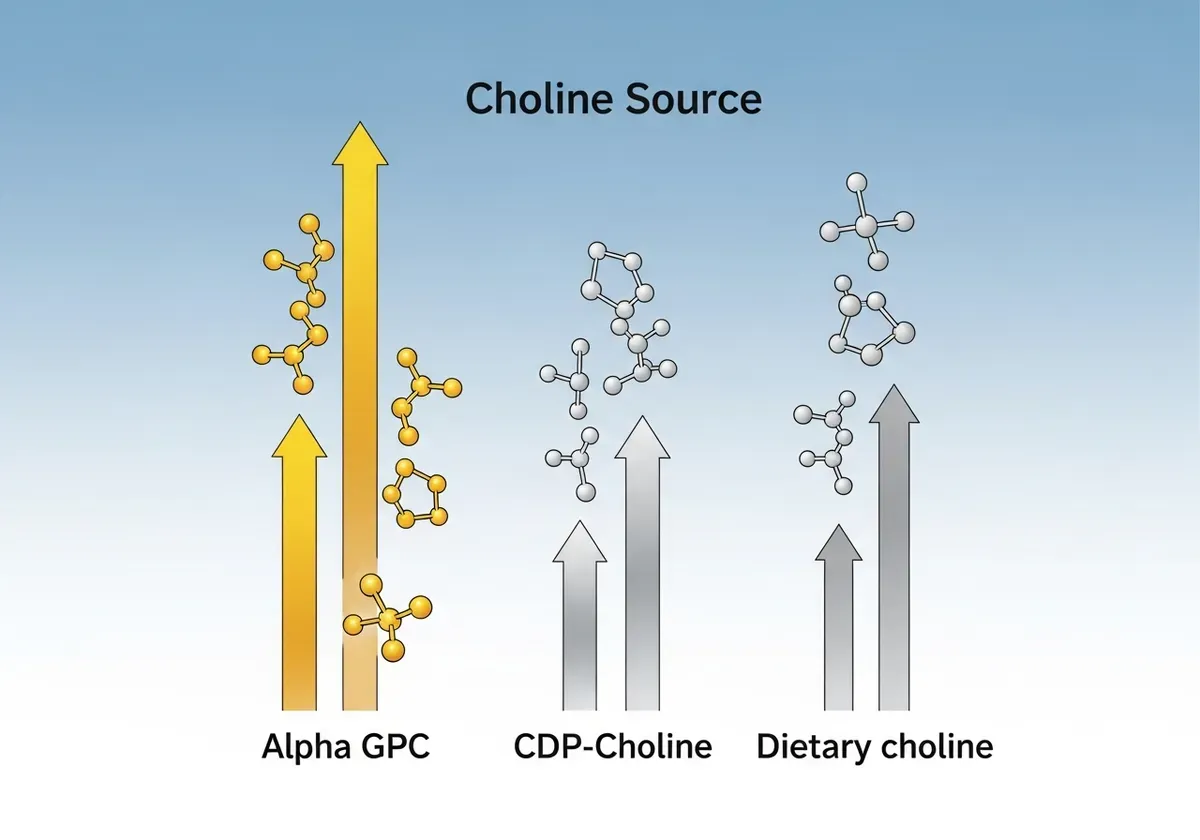
Alpha GPC contains approximately 40% choline by weight, but its molecular structure allows it to penetrate the blood-brain barrier far more effectively than choline bitartrate or phosphatidylcholine from lecithin. This bioavailability difference translates to more choline actually reaching brain tissue per milligram consumed.
Food sources like eggs (147mg choline per large egg) and beef liver provide choline bound to phospholipids that require extensive digestion before absorption. Your body then distributes this choline throughout multiple organ systems, with only a fraction crossing into the brain. Alpha GPC bypasses much of this inefficiency.
For older adults, this matters doubly. Digestive efficiency declines with age, reducing nutrient absorption from food, and the brain's acetylcholine synthesis capacity also diminishes. Alpha GPC's superior bioavailability compensates for both age-related limitations, delivering usable choline despite these physiological changes.
How Alpha GPC Works in Your Body
After oral ingestion, Alpha GPC absorbs rapidly through your intestinal wall and enters systemic circulation within 30-60 minutes. The compound's glycerophosphate backbone allows it to cross the blood-brain barrier, the selective membrane protecting brain tissue from blood-borne substances, using the same transport mechanisms that move essential nutrients into neural tissue.
Once inside brain cells, Alpha GPC undergoes enzymatic breakdown that releases free choline. Cholinergic neurons then convert this choline into acetylcholine through a two-step process involving the enzyme choline acetyltransferase. In practice, this means supplemental Alpha GPC taken in the morning can increase acetylcholine availability during cognitively demanding afternoon tasks.
The compound also contributes to phosphatidylcholine synthesis, supporting the structural integrity of neuronal membranes. This dual action, boosting neurotransmitter production while maintaining cell membrane health, distinguishes Alpha GPC from simpler choline supplements that only provide precursor material for acetylcholine.
Research-Backed Benefits of Alpha GPC for Cognitive Function
Clinical trials demonstrate measurable cognitive improvements with Alpha GPC supplementation, particularly in populations experiencing age-related decline, though the evidence shows clearer benefits for those with existing impairment than for cognitively healthy younger adults. The most robust findings come from studies using 1200mg daily (400mg three times daily) in patients with mild to moderate dementia.

Choline Adequate Intake and Daily Requirements
| Population Group | Adequate Intake (Daily) | Common Food Sources | Supplemental Dose (Research-Backed) |
|---|---|---|---|
| Adult Men | 550mg | Eggs, beef liver, salmon | 300-600mg Alpha GPC |
| Adult Women | 425mg | Eggs, chicken, Brussels sprouts | 300-600mg Alpha GPC |
| Older Adults with Cognitive Decline | 550-600mg+ | Same as above | 300-600mg Alpha GPC over 180 days |
| General Population Average | Below adequate intake | Most Americans fall short | Not typically needed if diet adequate |
Understanding daily choline requirements highlights the need to compare which food sources and supplements most efficiently deliver these necessary amounts.
Choline Sources and Bioavailability Comparison
| Choline Source | Choline Content | Blood-Brain Barrier Penetration | Absorption Timeline | Best Use Case |
|---|---|---|---|---|
| Alpha GPC | ~40% by weight | High - crosses BBB readily | 30-60 minutes | Cognitive support and age-related decline |
| CDP-Choline (Citicoline) | ~18% by weight | Moderate - indirect pathway | Variable | General neuroprotection |
| Choline Bitartrate | ~40% by weight | Low - poor BBB penetration | 1-2 hours | General supplementation |
| Lecithin/Phosphatidylcholine | ~3-10% by weight | Low - requires extensive digestion | 2-3 hours | Dietary support |
| Eggs (1 large) | 147mg total choline | Low - bound to phospholipids | Variable digestion | Dietary source |
| Beef Liver (3 oz) | 356mg total choline | Low - bound to phospholipids | Variable digestion | Dietary source |
Well, the research landscape isn't uniformly positive. A 2017 study found that 200mg Alpha GPC didn't improve cognitive function in healthy young adults compared to placebo, suggesting dose and baseline cognitive status significantly influence outcomes.
Memory Support and Age-Related Cognitive Decline
A multicenter, double-blind, placebo-controlled trial of 261 patients with mild to moderate Alzheimer's disease found that 400mg Alpha GPC three times daily for 180 days produced significant improvements on the Alzheimer's Disease Assessment Scale-Cognitive subscale (ADAS-Cog) and Mini-Mental State Examination (MMSE) compared to placebo (published in Clinical Therapeutics, 2003). These assessment tools measure memory recall, orientation, language, and attention.
The improvements weren't dramatic reversals, patients didn't return to pre-disease cognitive function. Instead, Alpha GPC slowed decline and produced modest gains in daily cognitive performance, translating to better recall of recent events and improved ability to follow conversations. For caregivers and patients, these incremental improvements meaningfully impact quality of life.
Studies in patients with vascular dementia and stroke-related cognitive impairment showed similar patterns, with Alpha GPC administration correlating with better cognitive recovery trajectories than placebo groups. However, research in cognitively healthy older adults remains limited, making it difficult to assess whether Alpha GPC prevents decline or only treats existing impairment.
That said, the mechanism of action, increasing acetylcholine availability, theoretically supports cognitive function regardless of baseline status. The question is whether already-adequate acetylcholine levels receive meaningful benefit from further supplementation, which current evidence doesn't definitively answer.
Mental Clarity, Focus, and Processing Speed
Subjective reports of improved mental clarity and reduced brain fog appear frequently in Alpha GPC research, though these outcomes prove harder to quantify than memory test scores. Brain fog, the experience of sluggish thinking and difficulty concentrating, often correlates with cholinergic dysfunction, making Alpha GPC's mechanism theoretically appropriate for this complaint.
Processing speed, measured by reaction time tests and symbol-coding tasks, showed improvements in some dementia studies but not consistently across all trials. The 2003 Alzheimer's trial noted that patients receiving Alpha GPC completed cognitive tasks more quickly at 90 and 180 days compared to baseline, though the magnitude of improvement varied considerably between individuals.
For attention and sustained focus, the evidence remains preliminary. Acetylcholine plays a documented role in attention networks, particularly in the prefrontal cortex, but translating this neuroscience into reliable supplementation outcomes requires more research in diverse populations.
Neuroprotection and Long-Term Brain Health
Alpha GPC's contribution to phosphatidylcholine synthesis theoretically supports neuronal membrane integrity, potentially offering protective effects beyond neurotransmitter support. Cell membranes constantly undergo repair and remodeling, and adequate phospholipid availability maintains this process, but whether supplemental Alpha GPC meaningfully enhances this protection in humans remains uncertain.
Animal studies suggest Alpha GPC may reduce oxidative stress and support mitochondrial function in neurons, but these findings don't automatically translate to human outcomes. What we can say with confidence is that maintaining adequate acetylcholine levels likely prevents some cognitive decline associated with cholinergic deficiency. Whether this constitutes true neuroprotection or simply symptom management depends on your definition, honestly.
Safety Considerations and Potential Side Effects for Older Adults
Alpha GPC demonstrates a generally favorable safety profile in clinical trials, with most adverse events classified as mild and transient, though recent cardiovascular concerns warrant discussion. The compound has been used in European clinical settings for decades, providing substantial real-world safety data beyond controlled trials.

The upper limit for total choline intake is 3,500mg daily for adults (according to the NIH), which provides a wide safety margin given typical Alpha GPC doses of 300-1200mg daily. However, individual tolerance varies, and older adults taking multiple medications face increased interaction risks.
Common Side Effects and How to Minimize Them
Reported side effects include headache, digestive discomfort, heartburn, insomnia, dizziness, and skin rash, occurring in approximately 5-10% of users in clinical trials. These effects typically emerge within the first week of supplementation and often resolve with continued use or dose adjustment.
Headaches likely result from excessive acetylcholine activity, creating a paradoxical effect where too much of a cognitive-supporting neurotransmitter causes discomfort. Starting with 300mg daily and increasing gradually over 2-3 weeks allows your brain to adjust to increased cholinergic activity, reducing headache incidence. Taking Alpha GPC with food minimizes digestive side effects, particularly heartburn and nausea.
If you experience persistent headaches, reducing your dose by 50% usually resolves the issue. Insomnia, when it occurs, typically responds to timing changes, taking your dose earlier in the day rather than evening prevents sleep disruption from increased acetylcholine-driven alertness.
Medication Interactions and Health Condition Considerations
Alpha GPC may interact with anticholinergic medications (drugs that block acetylcholine receptors), potentially reducing their effectiveness. These include certain antihistamines, antidepressants, bladder control medications, and Parkinson's disease treatments. Conversely, combining Alpha GPC with cholinergic drugs used to treat Alzheimer's disease (donepezil, rivastigmine, galantamine) might produce additive effects requiring medical supervision.
Individuals with epilepsy should exercise caution, as increased acetylcholine activity can theoretically lower seizure threshold in susceptible individuals. No definitive evidence establishes this risk, but the theoretical concern justifies medical consultation before starting supplementation.
People taking blood pressure medications should monitor their readings, as choline compounds can potentially lower blood pressure. This effect is generally mild but could become clinically significant when combined with antihypertensive drugs. If you're scheduled for surgery, discontinuing Alpha GPC 2 weeks beforehand prevents potential interactions with anesthetic agents that affect acetylcholine systems.
Long-Term Safety and Daily Use Considerations
Studies extending to 180 days show no tolerance development or diminishing effects, suggesting Alpha GPC remains effective with continued use. However, research beyond six months is limited, leaving long-term safety (multi-year use) incompletely characterized.
A 2021 analysis raised concerns about choline supplementation and cardiovascular risk, noting associations between high choline intake and increased trimethylamine N-oxide (TMAO), a metabolite linked to atherosclerosis. This finding complicates the safety picture, though it's worth noting that the research examined total choline intake from all sources, not specifically Alpha GPC, and association doesn't prove causation.
For daily use, cycling Alpha GPC (taking breaks every 3-4 months) represents a reasonable precautionary approach given limited long-term data. This strategy allows you to assess whether continued supplementation remains beneficial while potentially reducing any cumulative risks.
How to Choose and Use Alpha GPC Supplements Effectively
Quality varies dramatically among Alpha GPC supplements, with purity ranging from 50% to 99% Alpha GPC content depending on manufacturing standards. Understanding dosing protocols and product selection criteria helps you maximize benefits while avoiding low-quality formulations that deliver inconsistent results.

The most common pharmaceutical-grade Alpha GPC contains 50% Alpha GPC and 50% silica (as a flowing agent), meaning a 600mg capsule delivers 300mg actual Alpha GPC. Some premium supplements use 99% pure Alpha GPC, requiring dose adjustment to match clinical research protocols.
Recommended Dosage and How to Start Safely
Clinical trials showing cognitive benefits used 1200mg daily (400mg three times daily), but this total refers to 50% Alpha GPC formulations, delivering 600mg actual Alpha GPC. Starting with 300mg once daily (150mg actual Alpha GPC from standard formulations) for one week allows you to assess tolerance before increasing.
After the initial week, increase to 300mg twice daily if no adverse effects occur. Most users find benefits at 600-900mg total daily dose (300-450mg actual Alpha GPC). Taking doses 4-6 hours apart maintains stable choline availability throughout the day, supporting consistent cognitive function rather than peaks and valleys.
Morning and early afternoon dosing works best, as evening doses may interfere with sleep in some individuals. Taking Alpha GPC with fat-containing meals may enhance absorption, though research hasn't definitively established whether this improves outcomes. If you miss a dose, take it when you remember unless it's within 3 hours of your next scheduled dose, don't double up.
Quality Markers and What to Look for in Supplements
Third-party testing by ConsumerLab, NSF International, or USP verifies that supplements contain stated ingredients at labeled amounts without harmful contaminants. This testing matters particularly for Alpha GPC, as manufacturing quality significantly affects purity and efficacy.
Look for products specifying "L-Alpha glycerylphosphorylcholine" rather than just "choline" or vague "brain support blends" that don't disclose Alpha GPC content. The label should clearly state Alpha GPC percentage (typically 50% or 99%) and actual Alpha GPC content per serving. Avoid proprietary blends that don't specify individual ingredient amounts.
Reputable manufacturers provide Certificates of Analysis (COA) upon request, documenting third-party test results for purity, heavy metals, and microbial contamination. Products manufactured in FDA-registered facilities following Good Manufacturing Practices (GMP) demonstrate additional quality commitment, though these designations don't guarantee efficacy.
Assessing Whether Alpha GPC Is Working for You
Cognitive improvements from Alpha GPC emerge gradually over 4-12 weeks rather than immediately, requiring patience and systematic assessment. Keeping a simple daily log of subjective mental clarity, memory lapses, and focus quality helps you track changes that might otherwise go unnoticed amid day-to-day variability.
I started tracking my response to Alpha GPC using a basic spreadsheet where I rated morning mental clarity (1-5 scale) and counted how many times I lost my train of thought during writing sessions. Around week six, I noticed my 'derailment count' had dropped from 8-10 instances per 2,000-word article to 3-4, and my clarity ratings shifted from hovering around 3 to consistently hitting 4—subtle enough that I wouldn't have caught it without the data, but meaningful enough to justify continuing the supplement.
Objective measures provide more reliable assessment than subjective impressions alone. Free online cognitive tests measuring working memory, processing speed, and attention (like those from Cambridge Brain Sciences or Lumosity) establish baseline performance before starting Alpha GPC, then track changes at 4, 8, and 12 weeks. Improvements of 10-15% on these tests suggest meaningful benefit.
If you notice no subjective or objective improvements after 12 weeks at therapeutic doses (600-900mg daily), Alpha GPC may not significantly benefit your particular cognitive profile. Some individuals respond robustly while others show minimal effects, likely due to variations in baseline acetylcholine status, genetics affecting choline metabolism, and individual differences in blood-brain barrier transport efficiency.
Alpha GPC Compared to Other Choline Sources and Brain Supplements
Alpha GPC sits within a crowded supplement landscape containing multiple choline sources and alternative cognitive enhancers, each with distinct bioavailability profiles and mechanisms of action. Understanding these differences helps you make informed choices about whether Alpha GPC offers advantages over alternatives for your specific needs.
Alpha GPC vs. CDP-Choline (Citicoline)
CDP-choline delivers choline while simultaneously providing cytidine, a nucleotide precursor that supports cellular energy metabolism and membrane repair. This dual action gives CDP-choline theoretical advantages for neuroprotection, though head-to-head clinical comparisons with Alpha GPC remain limited.
Both compounds cross the blood-brain barrier effectively and increase brain acetylcholine levels. CDP-choline may produce fewer headaches as a side effect, possibly because its cytidine component supports energy metabolism that helps process increased acetylcholine activity. Typical CDP-choline doses range from 250-1000mg daily, with most cognitive studies using 500mg.
Cost and availability favor CDP-choline in some markets, particularly in the United States where it's marketed as Cognizin. Alpha GPC has stronger research support specifically in Alzheimer's disease populations, while CDP-choline shows broader evidence across stroke recovery, traumatic brain injury, and age-related cognitive decline.
Alpha GPC vs. Dietary Choline and Lecithin
Eggs, beef liver, and soybeans provide substantial dietary choline, but achieving therapeutic levels equivalent to supplemental Alpha GPC requires consuming large quantities daily. Three large eggs deliver approximately 440mg choline, adequate for baseline needs but below levels used in cognitive enhancement studies.
Lecithin supplements, derived from soy or sunflower, contain phosphatidylcholine that releases choline during digestion. However, lecithin's choline bioavailability to the brain is substantially lower than Alpha GPC's, requiring much larger doses to achieve comparable effects. A typical lecithin supplement providing 420mg phosphatidylcholine delivers only about 55mg actual choline, with uncertain brain penetration.
For maintaining adequate choline status, dietary sources suffice for most healthy adults. For therapeutic cognitive support in age-related decline, Alpha GPC's concentrated delivery and superior brain bioavailability provide clear advantages over food-based approaches.
Integrating Alpha GPC into a Comprehensive Brain Health Strategy
Alpha GPC works best as one component of a multi-faceted approach to cognitive health rather than a standalone solution. The research supporting cognitive benefits occurred within populations receiving standard medical care, proper nutrition, and often concurrent cognitive therapies, not as isolated interventions.

Acetylcholine availability matters, but so do inflammation control, vascular health, sleep quality, stress management, and continued cognitive challenge. A supplement that increases neurotransmitter precursors can't compensate for chronic sleep deprivation, sedentary lifestyle, or uncontrolled cardiovascular risk factors.
Lifestyle Factors That Enhance Alpha GPC's Benefits
Regular aerobic exercise increases brain-derived neurotrophic factor (BDNF) and improves cerebral blood flow, creating an environment where increased acetylcholine availability translates to better cognitive outcomes. Studies show that cognitive training combined with cholinergic enhancement produces superior results to either intervention alone, suggesting that using your brain actively while providing it with acetylcholine precursors maximizes benefits.
Sleep quality directly affects memory consolidation, the process that transfers information from short-term to long-term storage. Alpha GPC supports the acetylcholine-dependent mechanisms of consolidation, but inadequate sleep duration or quality undermines this process regardless of neurotransmitter availability. Prioritizing 7-8 hours of quality sleep amplifies any cognitive benefits from supplementation.
Mediterranean-style dietary patterns, emphasizing vegetables, fish, olive oil, and minimal processed foods, reduce neuroinflammation and provide complementary nutrients (B vitamins, omega-3 fatty acids, antioxidants) that support the metabolic pathways Alpha GPC influences.
Medical Monitoring and When to Consult Healthcare Providers
Starting Alpha GPC supplementation warrants discussion with your physician if you have cardiovascular disease, take multiple medications, or have been diagnosed with any form of cognitive impairment. Your doctor can assess whether Alpha GPC fits appropriately within your overall treatment plan and monitor for potential interactions or complications.
"Choline-containing supplements like Alpha GPC can interact with anticholinergic medications used for overactive bladder or allergies, and may theoretically affect blood pressure medications," says Dr. Steven Zeisel, Professor of Nutrition and Pediatrics at the University of North Carolina at Chapel Hill and director of the UNC Nutrition Research Institute.
Annual cognitive screening using validated tools like the Montreal Cognitive Assessment (MoCA) or MMSE provides objective data about your cognitive trajectory, helping distinguish normal aging from pathological decline. Blood pressure monitoring matters for long-term Alpha GPC users given choline's potential cardiovascular effects. If you develop new cardiovascular symptoms (chest pain, unusual shortness of breath, significant blood pressure changes), discontinue Alpha GPC and consult your physician promptly.
Realistic Expectations and Long-Term Commitment
Alpha GPC won't transform normal age-related cognitive changes into youthful mental performance, and it doesn't prevent or cure neurodegenerative disease. The clinical evidence shows modest improvements in cognitive test scores and daily function for people already experiencing decline, meaningful benefits, but not miraculous reversals.
For cognitively healthy adults taking Alpha GPC preventatively, benefits may be subtle and difficult to perceive subjectively. You might maintain cognitive function better over years than you would have otherwise, but this counterfactual is inherently unmeasurable.
Look, the decision to take Alpha GPC long-term requires weighing modest, well-documented cognitive benefits against costs (financial and potential health risks) in the context of your individual risk factors, baseline cognitive status, and health priorities. For some older adults, particularly those with family histories of dementia or early signs of decline, this calculus favors supplementation. For healthy younger adults, the evidence supporting preventative use remains thin.
Related Articles
- What Is a Nootropic? Complete Guide to Cognitive Enhancers
- Nootropic Supplements: Complete Guide to Cognitive Enhancement
- Nootropic Brain Supplements: Top Options for Cognitive Function
- Complete Nootropic Supplements List: All Compounds Explained
- L-Theanine and Caffeine Stack: The Perfect Focus Combination
- Best Nootropic Dietary Supplements: Evidence-Based Rankings
Frequently Asked Questions
How quickly does Alpha GPC start working, and when should I expect to notice cognitive improvements?
Most research studies showing cognitive benefits used 300-600mg daily over 180 days, suggesting you should allow at least 3-6 months of consistent use before expecting noticeable improvements in memory or mental clarity. Individual results vary based on age, baseline choline levels, and overall brain health, so patience and consistent daily use are essential.
Is Alpha GPC safe to take long-term, and are there any cumulative side effects from daily use?
Alpha GPC has demonstrated safety in long-term studies, but common side effects include headaches, dizziness, and gastrointestinal upset, especially at higher doses. To minimize these effects, start with lower doses and increase gradually, and consult your healthcare provider about your specific health conditions and medications before beginning long-term supplementation.
What's the difference between Alpha GPC and CDP-Choline (Citicoline), and which is better?
Both deliver choline to the brain effectively, but Alpha GPC contains approximately 40% choline by weight while CDP-Choline contains about 18%, meaning Alpha GPC may require smaller doses to achieve similar results. The "better" choice depends on individual tolerance, cost, and personal response—discuss with your healthcare provider which suits your specific needs.
Can I get enough choline from food alone, or do I really need a supplement like Alpha GPC?
Most Americans fall short of the recommended daily intake (550mg for men, 425mg for women), and while foods like eggs and beef liver contain choline, age-related digestive decline and the body's distribution of choline to multiple organs means less reaches the brain. Alpha GPC's superior blood-brain barrier penetration makes supplementation particularly valuable for older adults concerned about cognitive decline.
What should I look for when choosing an Alpha GPC supplement to ensure quality and effectiveness?
Look for third-party testing certifications (NSF, USP, or ConsumerLab), check that the supplement contains the stated amount of Alpha GPC per serving, verify the manufacturer's reputation, and avoid products with unnecessary fillers. Additionally, ensure the supplement is stored properly (away from heat and moisture) and check the expiration date before purchasing.
Does Alpha GPC interact with common medications, particularly those for memory or cognitive issues?
Alpha GPC may interact with medications that affect acetylcholine levels, such as certain Alzheimer's drugs (donepezil, rivastigmine) or anticholinergic medications. Before starting Alpha GPC, inform your healthcare provider about all medications and supplements you're taking to avoid potential interactions or duplicate effects.
How do I know if Alpha GPC is actually working for me, and what improvements should I track?
Keep a simple log tracking memory recall, mental clarity, focus duration, and processing speed over the 3-6 month trial period. Consider objective measures like completing crossword puzzles, reading comprehension tests, or noting improvements in work performance, rather than relying solely on subjective feelings, which can be influenced by placebo effects.