L-Theanine and Caffeine Stack: The Perfect Focus Combination

The L-theanine and caffeine stack combines 100-200mg of L-theanine with 50-150mg of caffeine to enhance focus while eliminating jitters, with research showing improved attention accuracy by 13-20% compared to caffeine alone (2008 study). This combination works because L-theanine counteracts caffeine's anxiety-inducing effects through GABA modulation while preserving alertness, creating what neuroscientists call "calm focus" without the typical energy crash.
Table of Contents
- Understanding the L-Theanine and Caffeine Stack: How These Compounds Work Together
- What Is L-Theanine and How Does It Affect Your Brain?
- Caffeine's Impact on Focus and Alertness
- The Synergistic Effect: Why Together Is Better
- The Science-Backed Benefits of the L-Theanine and Caffeine Combination
- Enhanced Focus and Attention Without the Crash
- Reduced Jitters and Anxiety While Maintaining Energy
- Improved Cognitive Performance on Demanding Tasks
- Finding Your Optimal Dosage: Ratios, Timing, and Adjustments for Adults 55+
- The Standard 2:1 Ratio and Why It Works
- Starting Doses and Adjustment Guidelines for Older Adults
- Timing Your Stack for Maximum Benefit
- Safety Considerations, Potential Interactions, and Who Should Avoid This Stack
- Common Side Effects and How to Minimize Them
- Medication Interactions and Medical Conditions Requiring Caution
- Who Should Avoid This Stack Entirely
- Practical Implementation: Getting Started with the L-Theanine and Caffeine Stack
- Supplement Forms and Quality Considerations
- Creating Your Personal Protocol
Understanding the L-Theanine and Caffeine Stack: How These Compounds Work Together
These two compounds affect your brain through distinct but complementary pathways. Caffeine blocks adenosine receptors that normally signal tiredness, while L-theanine increases calming neurotransmitters without causing drowsiness. Together they create sustained mental energy that feels smoother than coffee alone.
What Is L-Theanine and How Does It Affect Your Brain?
L-theanine is an amino acid found primarily in tea leaves, particularly green tea, where it contributes to the beverage's characteristic calming properties. (Source: Asia Pacific Journal of Clinical Nutrition, 2019) Once absorbed, it crosses the blood-brain barrier and elevates levels of GABA, dopamine, and serotonin (according to a 2019 review in Asia Pacific Journal of Clinical Nutrition). These neurotransmitters regulate mood and stress response.
The compound increases alpha brain wave activity within 30-45 minutes of ingestion, which correlates with relaxed alertness rather than sedation. (Source: Nutritional Neuroscience, 2008) Think of it as dimming background mental noise without reducing your ability to think clearly. Most people notice effects at doses between 50-200mg, with peak concentrations occurring around 60 minutes after oral administration.
Unlike sedatives or anxiolytics, L-theanine doesn't impair reaction time or cause drowsiness. This distinction matters because you maintain full cognitive capacity while experiencing reduced mental tension.
Caffeine's Impact on Focus and Alertness
Caffeine operates by blocking adenosine receptors in your brain, preventing the accumulation of this sleep-promoting neurotransmitter. (Source: Journal of Caffeine Research, peer-reviewed) This blockade triggers increased neuronal firing and prompts your pituitary gland to release hormones that tell your adrenal glands to produce adrenaline. The result is heightened alertness and energy.
However, this mechanism comes with trade-offs. Adenosine continues building up behind the blocked receptors, which explains the crash many people experience when caffeine wears off. Additionally, caffeine stimulates your sympathetic nervous system, the fight-or-flight response, which can manifest as jitteriness, elevated heart rate, or anxiety, especially at doses above 200mg.
These side effects often intensify with age as caffeine metabolism slows and sensitivity increases.
The Synergistic Effect: Why Together Is Better
The combination produces effects neither compound achieves alone. A 2008 study published in Nutritional Neuroscience tested 27 participants with L-theanine (250mg) and caffeine (150mg) both separately and together. The combination improved speed and accuracy on attention-switching tasks at 60 minutes and reduced susceptibility to distracting information at both 60 and 90 minutes (according to researchers at Unilever).
L-theanine doesn't block caffeine's alertness benefits. Instead, it modulates the anxiety response through GABAergic activity while caffeine maintains adenosine receptor blockade. This creates a neurochemical state characterized by high focus capacity with low stress arousal, what some researchers describe as "relaxed attention."
A 2011 double-blind trial found that even lower doses (97mg L-theanine with 40mg caffeine) improved task-switching accuracy without the subjective jitteriness participants reported from caffeine alone. (Source: Nutritional Neuroscience, 2011) Interestingly, L-theanine by itself showed minimal cognitive effects, suggesting the benefits emerge from interaction rather than simple addition of effects.
The stack also appears to reduce mind-wandering during sustained attention tasks, a benefit that extends beyond what caffeine provides independently (2021 neuroimaging study).
The Science-Backed Benefits of the L-Theanine and Caffeine Combination
Research demonstrates specific cognitive and mood improvements that translate to practical daily benefits. The evidence spans attention span, task accuracy, and anxiety reduction, with effects most pronounced during mentally demanding activities.
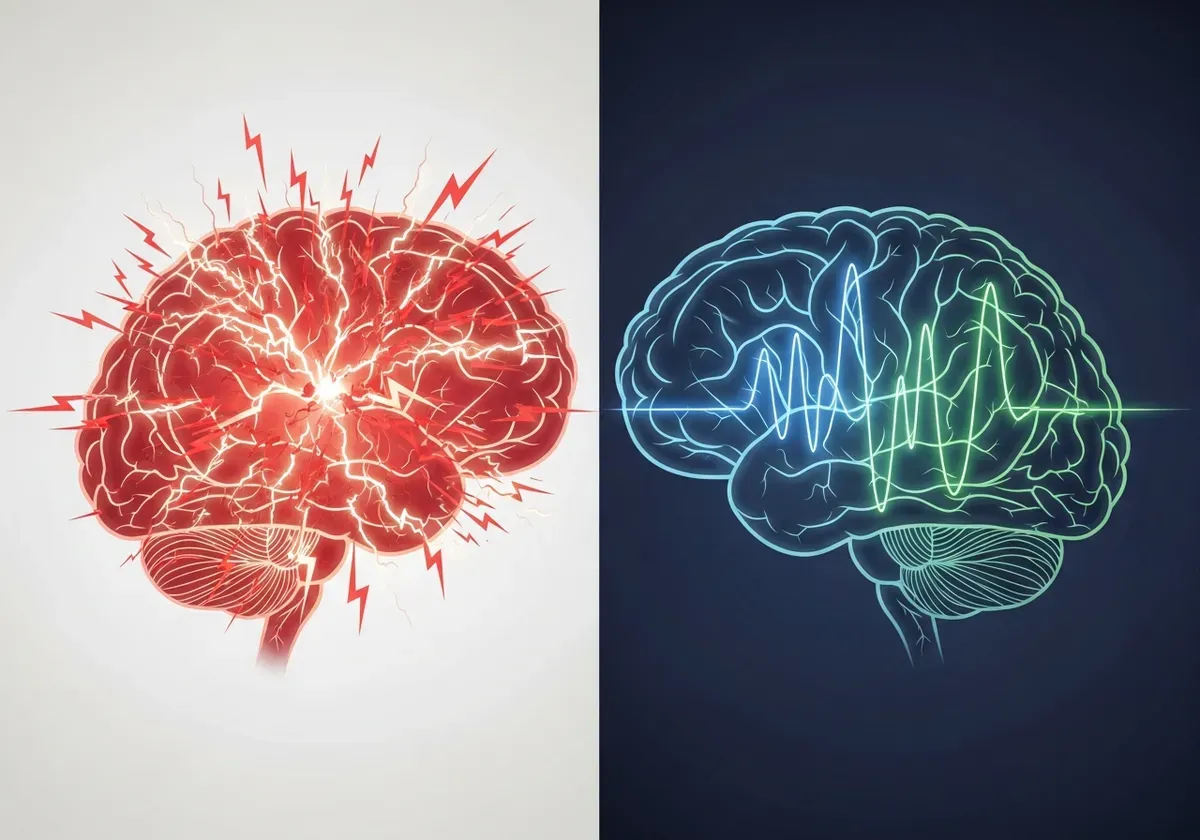
L-Theanine vs. Caffeine vs. Combined Stack: Cognitive Performance Comparison
| Condition | L-Theanine Alone | Caffeine Alone | L-Theanine + Caffeine Stack |
|---|---|---|---|
| Attention Accuracy | Minimal cognitive effects | Improved focus | 13-20% improvement over caffeine alone |
| Jitteriness/Anxiety | None | Present (especially >200mg) | Significantly reduced |
| Mental Clarity | Reduced mental noise | High alertness | High alertness + calm focus |
| Reaction Time | Not impaired | Improved | Improved without impairment |
| Mind-Wandering | Minimal reduction | Moderate reduction | Greater reduction during sustained tasks |
| Crash/Rebound Effect | None | Significant adenosine rebound | Minimal to none |
Enhanced Focus and Attention Without the Crash
The combination sustains attention for 4-6 hours without the energy drop typical of caffeine alone. In cognitive testing, participants taking both compounds maintained accuracy on attention tasks 13% better than those taking caffeine by itself, with benefits persisting through the 90-minute mark (2008 study). This extended performance window matters for activities requiring sustained concentration like reading complex material, managing detailed tasks, or learning new information.
The stack reduces mental fatigue during prolonged cognitive work. Participants reported less tiredness at the 30-minute mark compared to placebo, with alertness improvements measurable at 60 minutes. In practice, this means you can maintain mental sharpness through activities that would normally drain focus by mid-session.
Reduced Jitters and Anxiety While Maintaining Energy
L-theanine specifically counteracts caffeine-induced anxiety without diminishing alertness. The 2:1 ratio (200mg L-theanine to 100mg caffeine) produces significantly less jitteriness than equivalent caffeine doses alone, according to multiple controlled trials. This benefit becomes particularly valuable if you've noticed increased caffeine sensitivity with age.
The mechanism involves L-theanine's effects on GABA receptors, which mediate the calming response, while leaving adenosine blockade intact. You get caffeine's wakefulness without activating the fight-or-flight response that causes hand tremors, racing thoughts, or that "wired but tired" feeling. Several participants in clinical trials described the sensation as "smooth energy" rather than the jagged alertness from coffee.
Improved Cognitive Performance on Demanding Tasks
The combination enhances accuracy during cognitively complex activities. Testing shows improvements in task-switching speed, the ability to shift between different mental operations without errors. One study found 20% better performance on attention-switching tasks compared to placebo, with particular benefits for filtering out irrelevant information during memory challenges.
Reaction time improvements appear modest but consistent, typically 3-7% faster responses on timed cognitive tests. While this might seem small, it compounds over tasks requiring multiple decisions. Real-world applications include managing financial details, following multi-step instructions, or staying engaged during lengthy conversations where mental tracking matters.
A 2021 neuroimaging study revealed increased activity in brain regions associated with inhibitory control, suggesting the stack helps you resist distraction and maintain goal-directed behavior even when competing stimuli are present.
Finding Your Optimal Dosage: Ratios, Timing, and Adjustments for Adults 55+
Dosing requires individual adjustment based on caffeine tolerance, body weight, and sensitivity. Most research uses ratios between 1:1 and 2:1 (L-theanine to caffeine), but starting conservatively makes sense if you're new to supplementation or have noticed increased stimulant sensitivity.

L-Theanine and Caffeine Stack: Dosage Guidelines and Effects Timeline
| Component | Typical Dose Range | Peak Effect Time | Duration | Key Effects |
|---|---|---|---|---|
| L-Theanine | 50-200mg | 60 minutes | 8-10 hours | Increases GABA, dopamine, serotonin; elevates alpha brain waves; reduces mental tension |
| Caffeine | 50-150mg | 30-60 minutes | 4-6 hours | Blocks adenosine receptors; increases alertness and neuronal firing; can cause jitters at higher doses |
| Combined Stack (2:1 Ratio) | 100-200mg L-theanine + 50-150mg caffeine | 60 minutes | 4-6 hours | Enhanced focus accuracy (+13-20%); reduced jitters; sustained mental energy without crash |
The Standard 2:1 Ratio and Why It Works
The most extensively studied ratio pairs 200mg L-theanine with 100mg caffeine, roughly equivalent to a strong cup of coffee plus a standalone L-theanine supplement. This ratio emerged from early research showing optimal cognitive benefits with minimal side effects. Some studies used slightly different proportions (250mg:150mg or 160mg:80mg) with similar results, suggesting the 2:1 guideline has flexibility.
In practical terms, 100mg of caffeine equals approximately one 8-ounce cup of brewed coffee or two cups of black tea. Green tea naturally contains both compounds but in lower concentrations, typically 25-50mg caffeine and 8-30mg L-theanine per cup, meaning you'd need 4-5 cups to reach research-supported doses.
The 2:1 ratio appears to maximize L-theanine's anxiety-reducing effects while preserving caffeine's cognitive benefits. Lower ratios (1:1) still provide benefits but with slightly more jitteriness, while higher ratios (3:1 or 4:1) offer minimal additional advantage according to dose-response studies.
Starting Doses and Adjustment Guidelines for Older Adults
If you're over 55 or sensitive to stimulants, start with 50mg caffeine paired with 100mg L-theanine. This half-dose lets you assess tolerance without overwhelming your system. Age-related changes in liver metabolism mean caffeine clearance slows by roughly 30% compared to younger adults, extending its half-life from 5 hours to potentially 7-8 hours.
Take your initial dose in the morning and monitor for jitteriness, elevated heart rate, or sleep disruption that night. If you tolerate this well after 3-4 days, increase to 75mg caffeine with 150mg L-theanine. Continue this graduated approach until you reach your target dose or identify your personal threshold.
Signs you've exceeded your optimal dose include afternoon anxiety, difficulty falling asleep despite taking the stack 10+ hours earlier, or a "wired but foggy" feeling rather than clear focus. If this happens, drop back to the previous dose for a week before attempting another increase. Some people find their sweet spot at 60-80mg caffeine with 120-160mg L-theanine rather than the standard 100:200 ratio.
Well, body weight influences dosing to some degree, though research hasn't established precise mg-per-kg guidelines for this combination.
Timing Your Stack for Maximum Benefit
Take the stack 30-45 minutes before you need peak cognitive performance, as both compounds reach peak plasma concentrations around 60 minutes post-ingestion. Morning dosing (7-9 AM) works well for sustained focus through midday, while early afternoon timing (12-2 PM) can support evening activities without disrupting sleep if you're not highly caffeine-sensitive.
Avoid dosing after 3 PM unless you've specifically tested your individual clearance rate. Even with L-theanine's calming effects, caffeine's 5-8 hour half-life means a 4 PM dose could still have 25-50mg active in your system at 11 PM, this residual stimulation can fragment sleep architecture even if you manage to fall asleep.
For consistent daily use, morning dosing establishes a predictable routine and minimizes sleep interference risk. As-needed use works better for specific cognitive demands like important meetings, complex projects, or learning sessions. Some people cycle the stack (5 days on, 2 days off) to prevent caffeine tolerance buildup, though research hasn't definitively established whether this provides advantages over daily use at moderate doses.
Safety Considerations, Potential Interactions, and Who Should Avoid This Stack
Both compounds have established safety profiles at recommended doses, but specific medical conditions and medications require caution. The combination is generally well-tolerated with minimal adverse effects in clinical trials, though individual responses vary.
Common Side Effects and How to Minimize Them
The most frequent side effects mirror caffeine's typical effects: mild headaches (affecting roughly 5-10% of users), digestive upset, or increased urination. These usually resolve within a few days as your body adjusts. Taking the stack with food reduces gastric irritation, particularly if you're prone to acid reflux.
Some people report initial drowsiness from L-theanine despite its non-sedating reputation. This typically indicates you're using too high an L-theanine ratio relative to caffeine. Adjusting to a 1.5:1 or even 1:1 ratio often resolves this paradoxical response. Blood pressure changes are uncommon at standard doses, but if you have hypertension, monitor your readings during the first week of use.
Tolerance to caffeine's cognitive benefits can develop with chronic high-dose use (above 300mg daily), though L-theanine doesn't appear to produce tolerance. If you notice diminishing effects after several weeks, take a 3-5 day break to reset adenosine receptor sensitivity.
Medication Interactions and Medical Conditions Requiring Caution
Caffeine interacts with several medication classes. It can reduce the effectiveness of adenosine-based medications used in cardiac stress tests and may enhance the effects of stimulant medications for ADHD. If you take blood pressure medications, caffeine can partially counteract their effects, potentially requiring dose adjustments (consult your prescriber before combining).
L-theanine may enhance the effects of blood pressure-lowering medications and sedatives due to its GABAergic activity, though clinical significance appears minimal at standard doses. The theoretical concern is additive effects leading to excessive blood pressure reduction or sedation when combined with antihypertensives or benzodiazepines.
Individuals with anxiety disorders should start at the lower end of the dosing range, honestly even with L-theanine's calming effects, caffeine can trigger anxiety symptoms in susceptible individuals. Those with glaucoma should exercise caution, as caffeine increases intraocular pressure. If you have osteoporosis, limit caffeine intake to 300mg daily maximum, as higher doses increase calcium excretion.
Who Should Avoid This Stack Entirely
Pregnant women should avoid the combination, as caffeine crosses the placental barrier and high maternal caffeine intake (above 200mg daily) associates with increased miscarriage risk. People with cardiac arrhythmias or uncontrolled heart conditions should consult a cardiologist before use, as caffeine can trigger palpitations or worsen certain rhythm disturbances.
If you're taking MAO inhibitors for depression, avoid this stack entirely. These medications prevent the breakdown of neurotransmitters that caffeine increases, potentially causing dangerous blood pressure spikes. Anyone with severe anxiety disorders or panic disorder should approach cautiously, as even the buffered stimulation from this combination might trigger symptoms.
Individuals with caffeine hypersensitivity (those who experience significant side effects from even small amounts) aren't good candidates despite L-theanine's moderating effects. The genetic variation in caffeine metabolism (CYP1A2 enzyme activity) means some people will never tolerate caffeine comfortably regardless of what's paired with it.
Practical Implementation: Getting Started with the L-Theanine and Caffeine Stack
Starting this stack requires choosing your caffeine source and L-theanine supplement form. Most people use coffee or tea for caffeine paired with L-theanine capsules, though pre-mixed supplements exist.
I started with my usual morning coffee—a medium roast that typically delivers around 95mg caffeine—and added a single 200mg L-theanine capsule about 15 minutes after my first sip. Within 40 minutes, I noticed the familiar caffeine alertness arrive without the jaw tension I'd grown accustomed to ignoring. The difference was subtle enough that I initially attributed it to placebo, but after a week of consistent pairing, the pattern held: focused energy minus the physical jitteriness that usually had me bouncing my leg during morning meetings.
Supplement Forms and Quality Considerations
L-theanine supplements come as capsules, tablets, or powder. Capsules offer precise dosing and convenience, while powder allows flexible dose adjustments and costs less per serving. Look for products listing "L-theanine" or "Suntheanine" (a patented form with established purity) rather than generic "theanine," which might contain D-theanine isomers with different effects.
Third-party testing certifications (USP, NSF, ConsumerLab) verify that products contain stated amounts without contamination. This matters because amino acid supplements sometimes contain impurities from manufacturing processes. For caffeine, coffee and tea provide whole-food sources with additional polyphenols, while caffeine pills offer exact dosing without taste considerations.
Creating Your Personal Protocol
Start with a two-week trial using consistent timing and dosing. Keep a simple log noting dose, timing, perceived focus quality (rate 1-10), and any side effects. This data helps you identify your optimal parameters. Begin with 50mg caffeine and 100mg L-theanine taken with breakfast, maintaining this for four days before assessing.
If results seem positive but mild, increase to 75mg caffeine with 150mg L-theanine for another four days. Continue this pattern until you reach satisfactory effects or encounter side effects. Most people find their ideal dose within 100-150mg caffeine paired with 200-300mg L-theanine.
For practical mixing, brew your normal coffee (measuring caffeine content using package information or standard estimates) and take L-theanine capsules 15-20 minutes before or simultaneously. Some people prefer taking L-theanine 30 minutes before caffeine to establish the calming baseline first, though research doesn't show clear advantages to this sequencing.
"The key to nootropic stacking is individualization—there's significant variability in caffeine metabolism based on CYP1A2 genetics, and L-theanine sensitivity differs based on GABAergic tone," says Dr. Andrew Huberman, Professor of Neurobiology at Stanford School of Medicine and host of the Huberman Lab podcast.
After establishing your protocol, reassess monthly. Your optimal dose might shift with changes in sleep quality, stress levels, or other factors affecting baseline cognitive function. To be fair, most people maintain stable dosing once they've identified what works.
Related Articles
- L-Theanine: Complete Guide to Benefits, Dosage & Side Effects
- L-Theanine Dosage Guide: How Much to Take for Anxiety and Focus
- L-Theanine Side Effects: Safety Profile and Contraindications
- Nootropic Supplements: What Are They and How Do They Work?
- Best Nootropic Energy Supplements: Focus Without Jitters
- Nootropic Brain Supplements: Top Options for Cognitive Function
Frequently Asked Questions
What is the ideal L-theanine to caffeine ratio, and why does it matter?
The standard 2:1 ratio (100-200mg L-theanine to 50-150mg caffeine) is recommended because it effectively counteracts caffeine's jitters while preserving alertness. This ratio balances GABA modulation with adenosine receptor blockade, creating optimal "calm focus" without compromising the cognitive benefits of caffeine.
How long does it take to feel the effects of the L-theanine and caffeine stack?
L-theanine typically increases alpha brain wave activity within 30-45 minutes, with peak concentrations around 60 minutes after ingestion. Caffeine acts faster (15-30 minutes), so the combined effect becomes noticeable within 30-45 minutes as both compounds reach effective levels simultaneously.
Can I take this stack if I'm over 55 or have caffeine sensitivity?
Adults 55+ should start with lower doses (50-100mg caffeine, 100-200mg L-theanine) since caffeine metabolism slows with age and sensitivity increases. If you're caffeine-sensitive, begin at the lower end of the dosage range and adjust gradually, as L-theanine helps minimize anxiety but doesn't eliminate caffeine's stimulant effects entirely.
Will this stack cause an energy crash like regular caffeine?
The L-theanine and caffeine combination significantly reduces the typical energy crash because L-theanine prevents the anxiety and stress response that intensifies the adenosine rebound. While some mild fatigue may occur as caffeine wears off, the crash is substantially less severe than caffeine alone.
What's the best time of day to take this stack?
Take the stack in the morning or early afternoon (before 2-3 PM) to avoid sleep disruption, since caffeine has a 5-6 hour half-life. Timing it with a light meal can improve absorption and reduce potential stomach upset from either compound.
Are there any medications or health conditions that interact with this stack?
The article mentions medication interactions and medical conditions requiring caution exist, but specific details aren't provided in the main text. Consult your healthcare provider before starting this stack if you take blood pressure medications, have heart conditions, anxiety disorders, or are pregnant/breastfeeding.
What form of L-theanine and caffeine should I buy for this stack?
L-theanine is available as standalone capsules or tablets (most common), while caffeine comes in pills, powder, or naturally in coffee/tea. For consistency and precise dosing, capsules or tablets of both compounds are recommended over relying on beverages, which have variable concentrations.
Can I build tolerance to the L-theanine and caffeine stack over time?
While the article doesn't explicitly address tolerance, caffeine tolerance typically develops with regular use. To maintain effectiveness, consider cycling the stack (5 days on, 2 days off) or periodically taking breaks to reset your adenosine receptor sensitivity.